
Key Decision-Makers Set the Pace
The Producer, Director, DP, and AD team influence how information, decisions, and momentum move through a production. When they are aligned, departments can anticipate instead of react, creating more usable shooting time.
The Problem
A production can have a good crew, good locations, and good gear, but still not make the day if the people at the top are slow, unclear, or constantly changing direction without propperly communicating it to the crew.
The Producer, Director, DP, and AD team shape the rhythm of the set. If the production is setup poorly, decisions are late, blocking keeps changing, coverage is unrealistic, or departments do not know what is coming next, the whole crew starts reacting instead of moving forward.
The Producer Sets the Conditions
Before the Director, DP, and AD team ever step onto the set, the Producer has already shaped the day. Budget, schedule, locations, crew size, prep time, and resources all decide how much pressure the production will be under.
If the schedule is unrealistic, the locations are too ambitious, the crew is too small, or there is not enough prep time, the pressure eventually reaches the set. The Director, DP, AD team, and departments then spend valuable shooting time compensating for problems that were built into the production.
- Too many pages create pressure before the day even begins
- Too many locations turn the schedule into company moves
- Too little prep pushes decisions onto the shoot day
- Too few crew members force departments to play catch-up
- Unrealistic schedules create overtime before the camera rolls
The Director Sets the Creative Vision
The Director decides what matters most in the scene and gives the crew a clear creative vision. Story, performance, blocking, tone, and priorities all start there. When that vision is clear, every department knows exactly what to get ready for the scene.
Great directing is not only creative. It is also practical. The creative idea has to fit the time, locations, crew size and page count for the day.
- Clear vision gives departments direction
- Clear blocking keeps the set moving
- Fast decisions stop departments from waiting
- Creative ambition has to be in line with the schedule and budget
The DP Makes the Vision Practical
The DP turns the Director's vision into something shootable. Coverage, lighting, camera movement, lens choices, and the look of the scene all affect how fast the day can move.
A strong DP protects the image without pretending every setup has unlimited time. They know where quality matters most, where to simplify, and how to keep camera, G&E, and the AD team moving together.
The DP also controls complexity. Sometimes the best production decision is not adding more. It is knowing which setup is worth the time and which one will slow the day down without helping the scene enough to justify it.
- Build coverage around what the scene actually needs
- Choose setups that fit the available time
- Know when a setup is worth the time
- Simplify when the schedule demands it
- Protect the look without creating unnecessary complexity
- Work with the AD team to think ahead
The AD Team Makes the Day Executable
The AD team turns the creative and technical plan into movement. They coordinate cast, background, departments, timing, company moves, meal breaks, communication, and the next setup seamlessly.
A good AD team is not just calling times. They are protecting momentum. They are looking ahead, spotting friction, keeping departments informed, and making sure the production does not wait until a problem occurs.
A good AD team looks ahead, identifies potential problems early, and keeps small delays from turning into larger ones.
- Keep the first shot realistic and achievable
- Move cast and background before the set is waiting
- Keep departments one setup ahead
- Make sure changes reach the right people
- Coordinate company moves, meals, and turnaround
- Create a calm and efficient set
Key Decision-Makers Set the Pace
A shoot day works best when the Producer gives the production a realistic plan, the Director gives the crew a clear creative vision, the DP translates that vision into images on screen, and the AD team makes sure departments are ready to execute it.
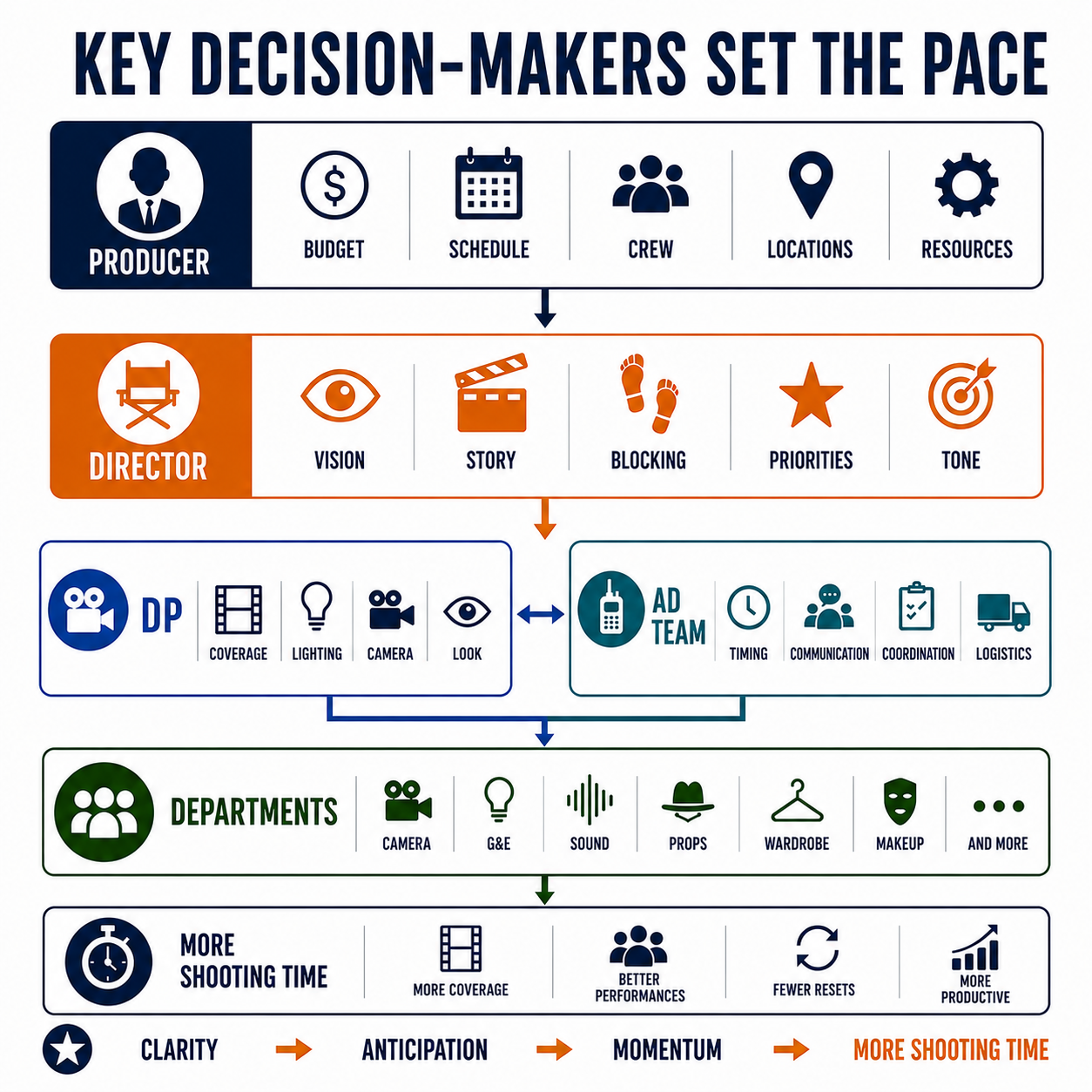
The pace of a shoot day is shaped before the camera rolls. Clear decisions give departments the chance to anticipate instead of react.
The DP and AD Team Have to Move Together
The DP and AD team are not stacked on top of each other. They work side by side. The DP is focused on creating the image. The AD team keeps departments aligned so that image can be executed efficiently. The best pace comes when both are honest about what the scene needs within the time frame available.
- The DP makes the director's vision practical for camera and lighting
- The AD team helps the departments to work together
- Both need to communicate before departments are waiting
- Both need to think ahead to the next setup, not only the current one
- When DP and AD are aligned, departments move with more confidence
- When they are not aligned, the set feels it immediately
The Crew Moves at the Speed of Clarity
Most delays do not happen because departments are incapable of moving faster. They happen because departments are waiting for information.
Lighting waits for blocking. Camera waits for shot decisions. Props wait for scene changes. Wardrobe waits for cast direction. Transportation waits for the next move. The set slows down when the information is not clear enough for people to act.
When the key decision-makers are aligned, departments can anticipate instead of react. That anticipation creates momentum before the next setup begins.
The faster information is communicated, the faster the production moves.
Trust Has to Be Earned
Pace is not only created by schedules and decisions. It is also created by the way people are treated.
When the Producer respects the work, the production is set up with more care. When the Director respects the crew's time and effort, the set feels it. When department heads lead with respect, people stay sharper, more engaged, and more willing to help to make the day.
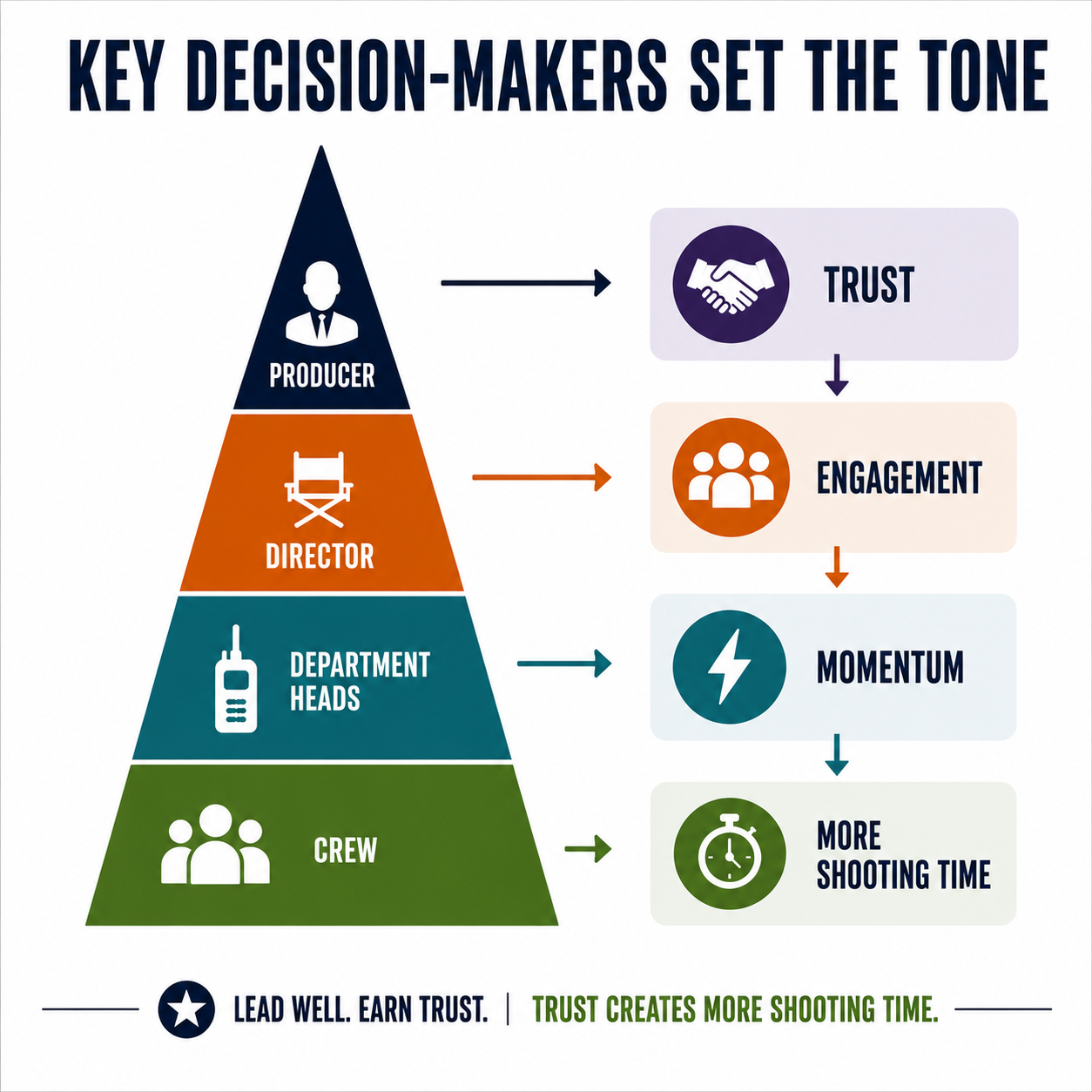
Trust is not a side note. It is one of the reasons crews stay engaged, work ahead, and protect the day.
Trust is not built through speeches. It is built through actions.
Crew members notice when breakfast is ready, lunch is decent, rates are clear, invoices get paid, turnaround is respected, and the production does what it said it was going to do.
Crews understand that some days run long. Trust disappears when overtime stops being the exception and starts feeling like part of the plan.
Those details may seem small, but they tell people whether the production values their time and effort.
- Respecting time creates trust
- Keeping promises builds credibility
- Clear rates and reliable payment remove friction
- Good meals and proper turnaround show respect
- Trust keeps departments engaged when the day gets difficult
- Trusted productions get more from the same crew
The Real Production Lesson
The pace of a shoot day is not created by yelling “move faster” at the end of the day. By then, it's already too late.
Pace is created by the way the production is built, the clarity of the creative vision, the practicality of the shooting schedule, the strength of the AD team, and the respect shown to the people doing the work.
The Producer sets the conditions. The Director sets the vision. The DP makes it shootable. The AD team makes it executable. Departments bring it to life.
Clarity allows departments to anticipate. Trust keeps them engaged. Momentum creates more usable shooting time.
Crews move faster when they are not guessing. Give departments a clear vision, a realistic plan, and enough respect to do the work well.
Are the key decision-makers helping departments anticipate, or forcing the crew to react one problem at a time?