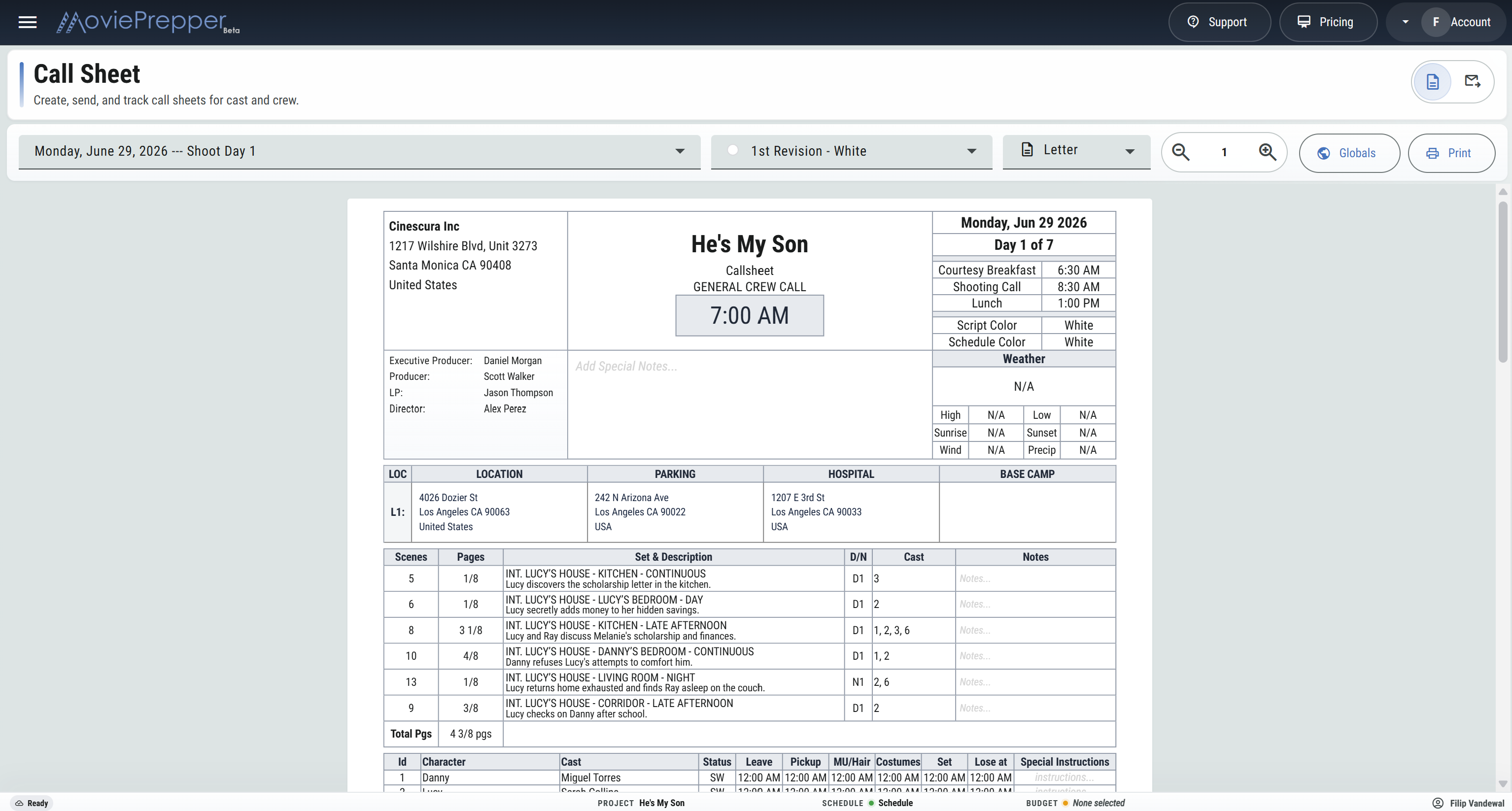
Select the day
Open a scheduled shoot day and choose the call-sheet revision color and paper size.
Film production call sheets
Start with the scheduled shoot day, then set crew and cast calls, confirm locations, check weather, arrange the day's scenes, and issue a call sheet built from current production information.
Keep the day's scenes, cast, background, stand-ins, crew, department instructions, catering, walkie channels, parking, base camp, hospital, sides, and attachments together from prep through distribution.
From the board to the crew
Select a shoot day and bring its scenes, date, cast, sets, page counts, schedule color, contacts, and locations into the daily call. Production can then make the day-specific adjustments before anything is printed or sent.
Open a scheduled shoot day and choose the call-sheet revision color and paper size.
Establish general crew call, breakfast, shooting call, lunch, cast movement, background, stand-ins, and departmental crew calls.
Review scenes, pages, locations, parking, base camp, hospital, weather, notes, catering, and department instructions.
Print the PDF or send it to selected recipients with sides and attachments, then follow views and confirmations.
The daily production document
Every section can be prepared for the specific shoot day without retyping the production's existing breakdown, schedule, contacts, and locations.
Set general crew call, courtesy breakfast, shooting call, and lunch in either 12-hour or 24-hour production time.
Issue prelim, white, blue, pink, and later call-sheet revisions with the revision color visible on the document.
Use the production company information, company logo, title artwork, project name, and selected key personnel.
Place the day's most important crew notice prominently near the top of the call sheet.
Pull conditions from the first call-sheet location with a city, including high, low, sunrise, sunset, wind, and precipitation.
Select locations from the production library and show separate addresses and instructions for set, crew parking, hospital, and base camp.
Bring in scheduled strips with time, episode, scene, pages, set, one-liner, script day, cast IDs, and notes.
Reorder or remove scenes, add strips from the library, create a pickup strip, or insert a production banner directly on the call.
Prepare cast status, leave, pickup, makeup and hair, costume, on-set, lose-at, and special-instruction fields.
Add stand-ins with call and on-set times, then list background by quantity, description, call, and on-set time.
Carry the crew list into department groups and set individual leave and call times for the day.
Show the following day's scenes and locations, with additional overflow pages when the production needs more room.
Scheduled scenes and breakdown elements
The call sheet starts from scheduled strips, but the day's document can be adjusted for late changes, pickups, splinter work, or a revised running order. Choose the visible columns and the scene elements that belong in cast, background, or department sections.
BUS TERMINALAva arrives before dawn.
1, 3WAITING AREAThe driver spots the red coat.
1, 3, 6PLATFORMAva boards as police arrive.
1, 8Set, parking, hospital, and base camp
A shooting location is not the same as crew parking or base camp. Select the locations working that day and decide which address markers should appear on the issued call sheet.
Cast, crew, and department calls
Use the scheduled scenes to build the cast and background sections, then make the individual adjustments production needs for the day.
List character and performer with status, leave, pickup, makeup/hair, costume, on-set, lose-at, and special instructions.
Add stand-ins from contacts and select background elements from scheduled scenes, with quantities and individual working times.
Group contacts by department and position, add or remove people for the shoot day, and set individual leave and call times.
Select scene elements by department and show the scenes where each requirement works, with notes for the department.
Add meal servings, head counts, ready-to-serve times, and dietary totals for vegetarian, vegan, allergies, and other restrictions.
Publish channel assignments for up to ten channels so departments know where production traffic belongs.
Call sheet delivery
Move from the prepared document into a delivery list built from project contacts, cast, background, and crew. Select the recipients, check their calls and contact information, attach the day's files, and send one revision of the call.
PDF and paper
Zoom the call-sheet preview while working, choose Letter, Legal, or A4 output, and print the prepared pages as a PDF. Longer calls can carry scene overflow and department crew pages without forcing the day into a one-page template.
Call sheet FAQ
Select a shoot day from the current schedule. Its date, scenes, cast, sets, page counts, and production information become the starting point.
Yes. Reorder or remove scheduled scenes, add scenes from the strip library, enter a new strip, or add a production banner.
Yes. Set cast movement times, stand-in and background calls, and individual crew leave and call times for the selected day.
Yes. Attach the saved sides packet for that shoot day and upload other production files before sending the call-sheet PDF.
The latest distribution shows recipient count and the sent, viewed, and confirmed status recorded for each recipient.
Prepare and print the call sheet in Letter, Legal, or A4 format, with zoom controls for the working preview.
Set the calls, check the locations and weather, prepare the crew document, attach the sides, and know who has confirmed.
Start Your Project